
Collagen casings are manufactured, tube-shaped membranes used to hold sausage meat during processing, smoking, and cooking. Unlike natural casings (which are made from animal intestines), collagen casings are engineered from the naturally occurring collagen protein found in animal hides, specifically the corium layer of beef or pork skins.
They were developed as a highly efficient, uniform alternative to natural casings and have become a dominant standard in modern sausage production.
How They Are Made
The production process turns raw animal hides into a highly functional food packaging product:
- Extraction: High-quality collagen protein is extracted from the hide layer through a strict chemical and mechanical cleansing process.
- Homogenization: The extracted collagen is broken down into a gel-like slurry.
- Extrusion: The slurry is forced through a circular die to form a seamless, continuous tube.
- Drying and Shirring: The casing is dried, wound, and often „shirred“ (compressed tightly together) into compact sticks for easy loading onto commercial sausage-stuffing horns.
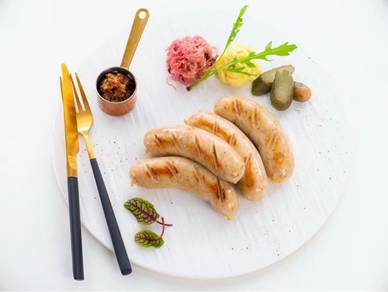
Key Categories
Collagen casings generally fall into two main categories based on how the sausage will be consumed:
- Edible Collagen Casings: These are thin, tender, and designed to be eaten right along with the sausage. They provide a distinct „snap“ when bitten into and are commonly used for fresh frying sausages (like breakfast links or bratwursts), frankfurters, and snack sticks.
- Non-Edible (Inedible) Collagen Casings: These are much thicker and structurally tougher. They are built to withstand heavy hanging weight and long-term drying cycles. They are typically peeled off before consumption and are ideal for large-caliber products like salami, summer sausage, and pepperoni.
Core Advantages Over Natural Casings
| Feature | Collagen Casings | Natural Casings (Intestines) |
| Uniformity | Perfect diameter consistency (caliber) and uniform wall thickness. | Variable diameter and natural shapes/curves. |
| Production Efficiency | Arrives dry, sterile, and ready to stuff immediately without pre-soaking. High speeds on automated machinery. | Requires washing, flushing, and sorting by size. High risk of tearing on high-speed lines. |
| Shelf Life | Excellent long-term stability; does not require refrigeration or heavy salting. | Limited shelf life; must be kept salted and chilled to prevent spoilage. |
| Bite Experience | Consistent „snap,“ though slightly less delicate than high-end natural sheep casing. | The gold standard traditional bite and tender texture. |
Schreibe einen Kommentar